Introduction
Ceramics have traditionally been valued for their excellent hardness, thermal stability, chemical resistance, and mechanical strength. However, modern applications increasingly require ceramic materials with additional functional properties, including improved optical clarity and transparency. From advanced optical components to electronic devices and specialized industrial products, transparent ceramics are becoming an important area of material development.
One of the key challenges in producing transparent ceramics is controlling internal defects, porosity, and light scattering within the material structure. Even small imperfections can reduce transparency and create a cloudy appearance. Recent advancements in material engineering have shown that additives and structural modifiers can significantly influence ceramic optical performance. Among these materials, the use of fumed silica ceramic transparency solutions has attracted attention due to the unique properties of silica nanoparticles.
Fumed silica is a fine, high-purity form of silicon dioxide produced through a flame-based process. Its extremely small particle size, high surface area, and excellent dispersibility make it valuable in ceramic manufacturing. By improving microstructure control and reducing optical defects, fumed silica can contribute to the development of ceramics with enhanced transparency and surface quality.
Understanding Transparency in Ceramic Materials
Why Are Some Ceramics Transparent?
Transparency in ceramics depends on how efficiently light can travel through the material without being scattered or absorbed. Unlike traditional ceramics that contain pores and irregular grain boundaries, transparent ceramics require highly controlled structures.
Several factors influence ceramic transparency:
- Low internal porosity
- Uniform grain size
- High material purity
- Controlled grain boundaries
- Reduced defects and impurities
When light encounters pores, uneven structures, or impurities, it changes direction and scatters. This scattering reduces transparency and creates a hazy appearance.
Challenges in Producing Transparent Ceramics
Manufacturing transparent ceramics is more complex than producing conventional ceramic products. During processing, small defects can significantly affect optical performance.
Common challenges include:
- Difficulty achieving complete densification
- Uneven particle distribution
- Excessive grain growth
- Residual pores after sintering
To overcome these limitations, researchers use advanced additives that improve the ceramic structure during processing.
What Is Fumed Silica?
Characteristics of Fumed Silica
Fumed silica is a nanoscale silicon dioxide material with particles typically measured in the nanometer range. It has several unique characteristics that make it useful in advanced ceramic applications.
Important properties include:
- Extremely high surface area
- Excellent chemical stability
- Strong thickening ability
- Fine particle size
- Ability to modify material structures
Because of these properties, fumed silica can influence ceramic processing by improving particle interactions and supporting more uniform structures.
Role of Fumed Silica in Ceramic Manufacturing
When added to ceramic formulations, fumed silica can modify the behavior of the ceramic mixture. It improves powder packing, supports better dispersion, and helps reduce structural irregularities.
A more uniform ceramic structure allows light to pass through with less scattering, which contributes to improved optical transparency.
How Fumed Silica Improves Ceramic Transparency
Reducing Porosity
Porosity is one of the biggest obstacles to achieving transparent ceramics. Small pores inside ceramic materials act as barriers that scatter light.
Fumed silica can help improve densification during sintering by filling microscopic gaps between particles. This reduces the formation of pores and creates a denser ceramic structure.
A lower pore content allows light transmission to improve, resulting in clearer ceramic materials.
Improving Microstructural Uniformity
The internal grain structure of ceramics directly affects optical performance. Large or irregular grains can cause uneven light behavior.
Fumed silica helps control grain development during processing. By influencing particle interactions and sintering behavior, it supports the formation of more uniform microstructures.
This improved consistency contributes to better transparency and surface appearance.
Enhancing Particle Distribution
Uniform distribution of ceramic components is essential for producing high-quality transparent materials. Poor dispersion can create weak points and optical defects.
The nanoscale characteristics of fumed silica allow it to interact effectively with ceramic particles. This improves mixing efficiency and supports a more consistent material composition.
Applications of Transparent Ceramics Improved by Fumed Silica
Optical Components
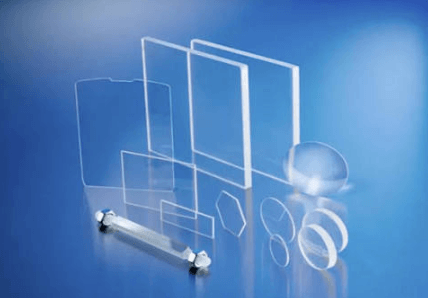
Transparent ceramics are increasingly used in optical applications where durability and clarity are required. These materials can serve as protective windows, lenses, and specialized optical components.
Improved transparency allows better light transmission while maintaining ceramic advantages such as hardness and thermal resistance.
Electronic and Display Technologies
Advanced electronic devices often require materials that combine optical performance with mechanical durability.
Transparent ceramic materials can be used in display covers, protective layers, and electronic components where traditional glass may not provide sufficient strength.
Aerospace and Defense Applications
Aerospace systems require materials capable of operating under extreme environmental conditions. Transparent ceramics offer advantages due to their resistance to heat, impact, and chemical exposure.
Enhanced transparency and structural reliability make them valuable for specialized windows and protective components.
Advantages of Using Fumed Silica in Ceramic Production
Improved Processing Performance
Fumed silica can improve the handling and processing characteristics of ceramic mixtures. Better flow behavior and particle interaction allow manufacturers to achieve more consistent production results.
Enhanced Material Reliability
Ceramics with improved internal structures generally demonstrate better mechanical reliability. Reducing defects improves resistance against cracking and failure.
Better Surface Quality
A uniform ceramic structure contributes to smoother surfaces and improved visual appearance. This is especially important for applications requiring both functional and aesthetic performance.
Manufacturers researching advanced material solutions can explore technologies related to fumed silica ceramic transparency to understand how silica-based additives influence ceramic optical properties.
Factors Affecting the Performance of Fumed Silica in Ceramics
Amount of Fumed Silica Added
The concentration of fumed silica must be carefully controlled. Too little may not provide noticeable improvements, while excessive amounts may negatively affect processing or final properties.
Sintering Conditions
Temperature, pressure, and processing time influence the final ceramic structure. Proper sintering conditions are necessary to achieve maximum densification and transparency.
Compatibility With Ceramic Materials
Different ceramic systems respond differently to additives. The interaction between fumed silica and the ceramic matrix must be considered during formulation development.
Future Development of Transparent Ceramic Technology
The demand for advanced transparent ceramics is expected to increase as industries require stronger and more functional materials. Research continues to focus on improving processing methods, reducing manufacturing costs, and developing ceramics with multifunctional properties.
Fumed silica is likely to remain an important material in this field because of its ability to influence microstructure, improve processing performance, and support optical enhancement.
Future developments may expand the use of transparent ceramics in areas such as renewable energy systems, advanced electronics, medical devices, and next-generation optical technologies.
FAQs
1. How does fumed silica improve ceramic transparency?
Fumed silica improves ceramic transparency by reducing porosity, enhancing particle distribution, and supporting a more uniform microstructure. These improvements reduce light scattering inside the ceramic.
See also: The Future of Home Automation
2. What properties make fumed silica useful in ceramics?
Its high surface area, nanoscale particle size, chemical stability, and ability to improve material structure make fumed silica valuable in ceramic manufacturing.
3. Can fumed silica be used in all types of ceramics?
Fumed silica can be used in many ceramic systems, but its effectiveness depends on the ceramic composition, processing method, and desired final properties.
Conclusion
Fumed silica plays an important role in advancing ceramic technology by improving structural uniformity, reducing defects, and supporting better optical performance. The development of transparent ceramics requires precise control of microstructure, and silica-based additives provide valuable opportunities to achieve these improvements.
As industries continue searching for materials that combine transparency, strength, and durability, the contribution of fumed silica ceramic transparency technologies will become increasingly significant. Through continued research and innovation, fumed silica-enhanced ceramics may support new applications in electronics, optics, aerospace, and other advanced industries.